加速度センサー - ハードウェア
加速度センサーは、加速度を測定するための一般的なセンサーです。
In principle, precise measurements of acceleration can be double-integrated and used to track position (similarly to how the measurement of turn rate from a gyroscope can be integrated to determine heading) - however, in practice, accelerometers that are available within the legal FRC® price range are not nearly accurate for this use. However, accelerometers are still useful for a number of tasks in FRC.
The roboRIO comes with a built-in three-axis accelerometer that all teams can use, however teams seeking more-precise measurements may purchase and use a peripheral accelerometer, as well.
加速度センサーの種類
There are three types of accelerometers commonly-used in FRC: single-axis accelerometers, multi-axis accelerometers, and IMUs.
1軸加速度センサー
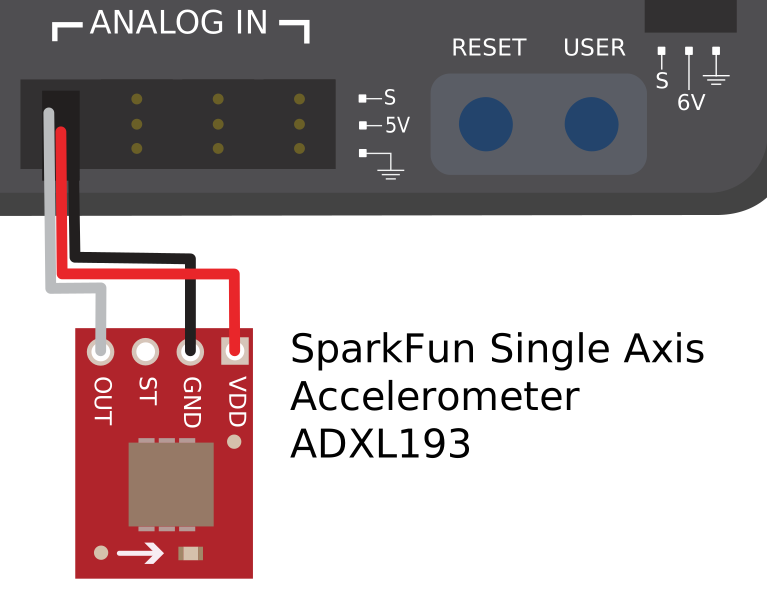
As per their name, single-axis accelerometers measure acceleration along a single axis. This axis is generally specified on the physical device, and mounting the device in the proper orientation so that the desired axis is measured is highly important. Single-axis accelerometers generally output an analog voltage corresponding to the measured acceleration, and so connect to the roboRIO's analog input ports.
多軸加速度センサー
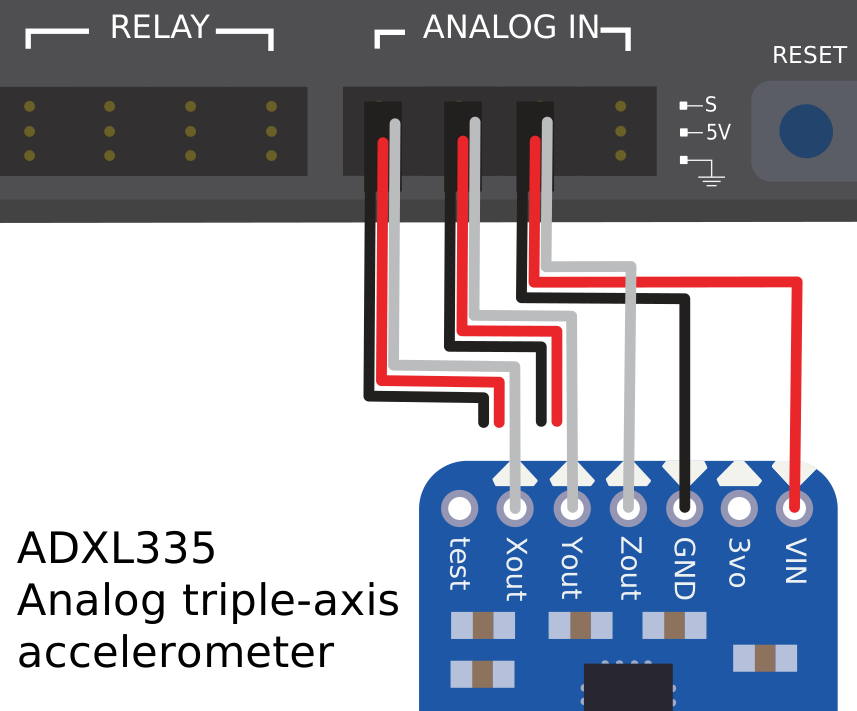
Multi-axis accelerometers measure acceleration along multiple spatial axes. The roboRIO's built-in accelerometer is a three-axis accelerometer.
周辺にある多軸加速度ピックアップは、単に複数のアナログ電圧を出力する(したがって analog input ports に接続することもできるし、(より一般的には)roboRIOの :doc:`serial buses のいずれかに通信することもあります
roboRIO built-in accelerometer
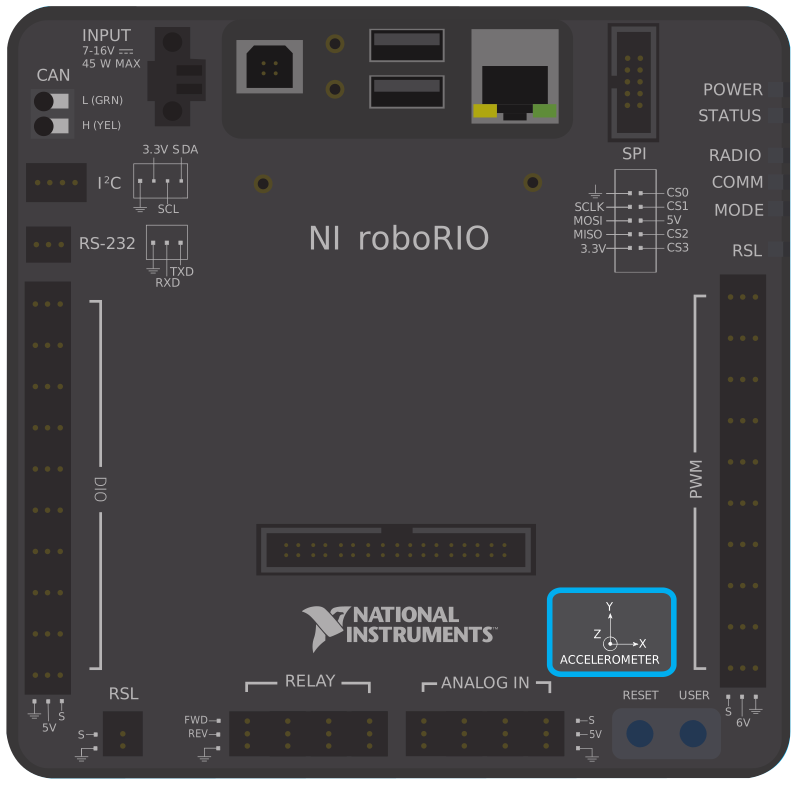
The roboRIO has a built-in accelerometer, which does not need any external connections. You can find more details about how to use it in the Built-in Accelerometer section of the software documentation.
IMUs (Inertial Measurement Units)
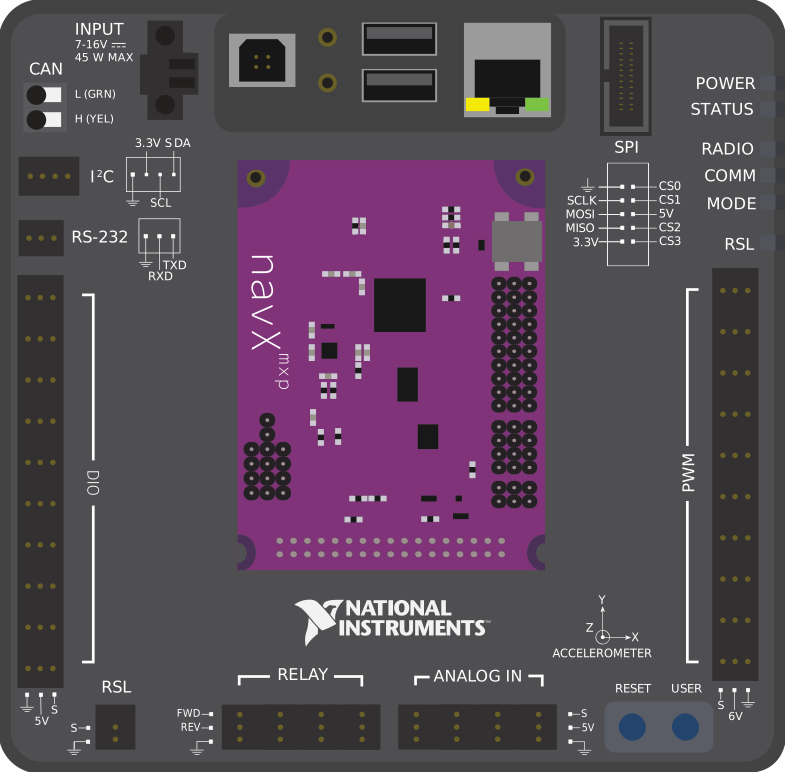
一般的なFRCデバイス(「慣性計測ユニット」または「IMU」として知られる)の中には、加速度計とジャイロスコープを組み合わせたものもあります。 一般的なFRCの例としては、以下のようなものがあります: